


HDR Photo Blending vs. Auto HDR: Why Pros Get Better Results
- Jack Thomas
- Nov 21
- 5 min read

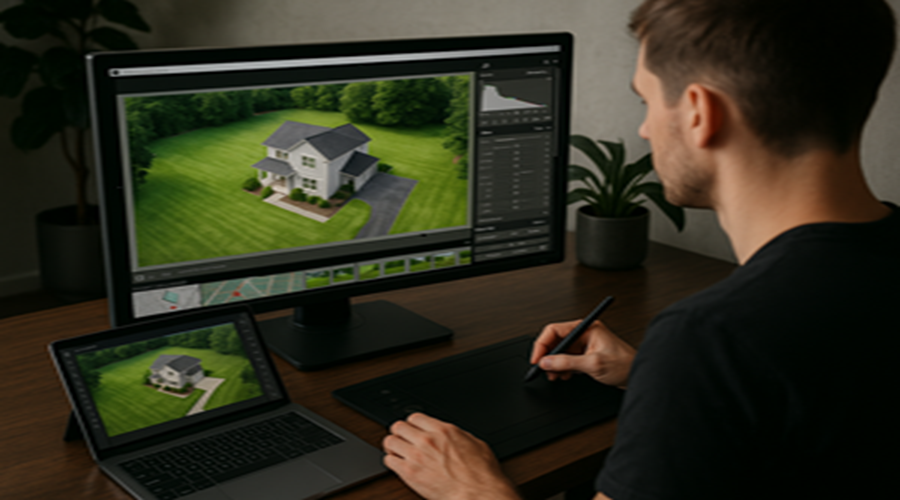
You know that feeling when you snap what you think is the perfect photo, only to see it on your screen and... it's just meh? The sky's blown out, the shadows are muddy, and somehow your phone made everything look artificial. Yeah, we've all been there.
Here's the thing: your camera or smartphone is trying its best with Auto HDR, but there's a massive gap between what it can do and what professional HDR Photo Blending Service can achieve. And if you're in real estate, architecture, or any business where visuals make or break deals, understanding this difference isn't just helpful—it's essential.
The Auto HDR Trap Everyone Falls Into
Let's be real for a second. Auto HDR sounds amazing on paper. Your phone promises to capture "stunning dynamic range" with just one tap. Real estate agents across the USA love the convenience. Snap a few property shots, let the phone work its magic, and boom—done in minutes.
But here's what actually happens.
Auto HDR uses algorithms that make quick decisions about your photo. It's like asking a robot to paint a masterpiece in 30 seconds. Sure, it'll give you something, but it's not going to be museum-worthy. The software cranks up the shadows, pulls down the highlights, and often creates that infamous "HDR look"—you know, where everything looks weirdly flat and oversaturated, like someone turned reality up to 150%.
For a casual Instagram post? Maybe it's fine. But for selling a $500,000 property or showcasing architectural work that took months to design? That's where Auto HDR completely misses the mark.
What Makes Professional HDR Photo Blending Different
Now, let me walk you through what happens when professionals handle your images. Professional HDR Photo Blending Service isn't about slapping on a filter and calling it a day. It's a meticulous process where skilled editors manually combine multiple exposures of the same scene. Think of it like a chef carefully layering flavors instead of just microwaving a frozen dinner.
Here's the breakdown: photographers typically shoot 3-5 different exposures—one for the bright areas, one for the mid-tones, and one for the shadows. Then, instead of letting a computer randomly mash them together, a trained editor hand-picks the best parts of each image and blends them seamlessly.
The windows show the actual view outside without looking nuclear-bright? Check. The interior details are visible without looking like a cave? Check. Natural colors that actually represent the space? Absolutely.
This is especially crucial for Twilight Photo Editing, where you're dealing with extreme lighting conditions. That magic hour when the sky turns deep blue and the interior lights create warmth? Auto HDR absolutely butchers those shots. Professional blending preserves that delicate balance that makes twilight photos so captivating.
The Real-World Impact on Your Business
Let's talk about money—because that's what matters, right?
A real estate agent in California recently shared that after switching from Auto HDR to professional HDR Photo Blending Service, her listings started getting 47% more inquiries. Why? Because the photos actually looked inviting. They didn't have that "fake" quality that makes buyers scroll past.
In the architecture world, firms competing for contracts need portfolios that showcase their work authentically. When a potential client sees images that look over-processed, it doesn't scream "attention to detail"—it screams "shortcut."
The USA real estate market is incredibly competitive. Properties are sitting longer on the market if the photos don't immediately grab attention. And here's the kicker: buyers spend an average of 7 seconds looking at a listing photo before deciding to keep scrolling or dive deeper. Seven seconds! That's all you get.
Breaking Down the Technical Stuff (Without the Headache)
Okay, I promise to keep this simple.
Auto HDR uses something called "tone mapping"—it compresses all the light information into a single image using preset algorithms. It's one-size-fits-all, which works about as well as buying pants without trying them on. Sometimes you get lucky, but usually, something just doesn't fit right.
Professional blending uses "luminosity masking" and "layer-based editing." Sounds fancy, but basically, editors are telling the software: "Use the sky from this photo, the interior from that photo, and blend this specific area at 60% opacity." Every decision is intentional and tailored to that specific image.
For Twilight Photo Editing, professionals also color-correct each layer separately. The warm interior lights need different treatment than the cool evening sky. Auto HDR? It applies the same adjustments everywhere, which is why you end up with weird color casts and unnatural-looking scenes.
When Does Auto HDR Actually Work?
I'll be honest with you—Auto HDR isn't always the villain. For personal photos, quick social media posts, or situations where you need something fast and don't have other options, it's totally fine. If you're photographing your lunch or a quick selfie, nobody's expecting professional-grade editing.
But the moment your images represent your business, your brand, or your biggest financial asset? That's when you need to level up.
The Cost-Benefit Reality Check
"But professional editing is expensive!" I hear you.
Let's do the math. A professional HDR Photo Blending Service in the USA typically costs anywhere from $2-$5 per image. For a complete property shoot of 25-30 photos, you're looking at maybe $75-$150.
Now compare that to a property sitting on the market an extra 30 days because the photos look mediocre. Or a lost architectural contract because your portfolio didn't stand out. Suddenly, that editing cost looks like the bargain of the century.
Plus, many services offer bulk pricing or subscription models that bring the per-image cost way down. It's an investment that pays for itself—sometimes within a single transaction.
The Future Is Human (With a Little Tech Help)
Here's the interesting part: the best results come from combining human expertise with AI tools. Professional editors use advanced software, but they're the ones making creative decisions. They understand composition, color theory, and most importantly, what makes an image emotionally compelling.
Auto HDR is getting better—I won't deny that. But it's still years away from matching the nuanced judgment of a trained human eye. Especially for high-stakes imagery where every detail matters.
Your Next Move
If you're currently using Auto HDR for your business listings, I'm not saying your photos are terrible. But I am saying they could be significantly better—and that difference could translate directly into more clicks, more interest, and more sales.
The real estate and architectural photography game in the USA has evolved. Buyers and clients expect more. They can spot lazy editing from a mile away, and they're making judgments about your professionalism based on those images.
Whether it's standard property photos or specialized Twilight Photo Editing, working with a professional HDR Photo Blending Service isn't an expense—it's a competitive advantage. It's the difference between blending in with hundreds of other listings and standing out as the obvious choice.
So next time you're about to hit that Auto HDR button, ask yourself: is "good enough" really good enough for what you're trying to achieve? Or is it time to step up your visual game and let the pros show you what your properties can really look like? Your next client is out there scrolling right now. Make them stop and stare.


Comments